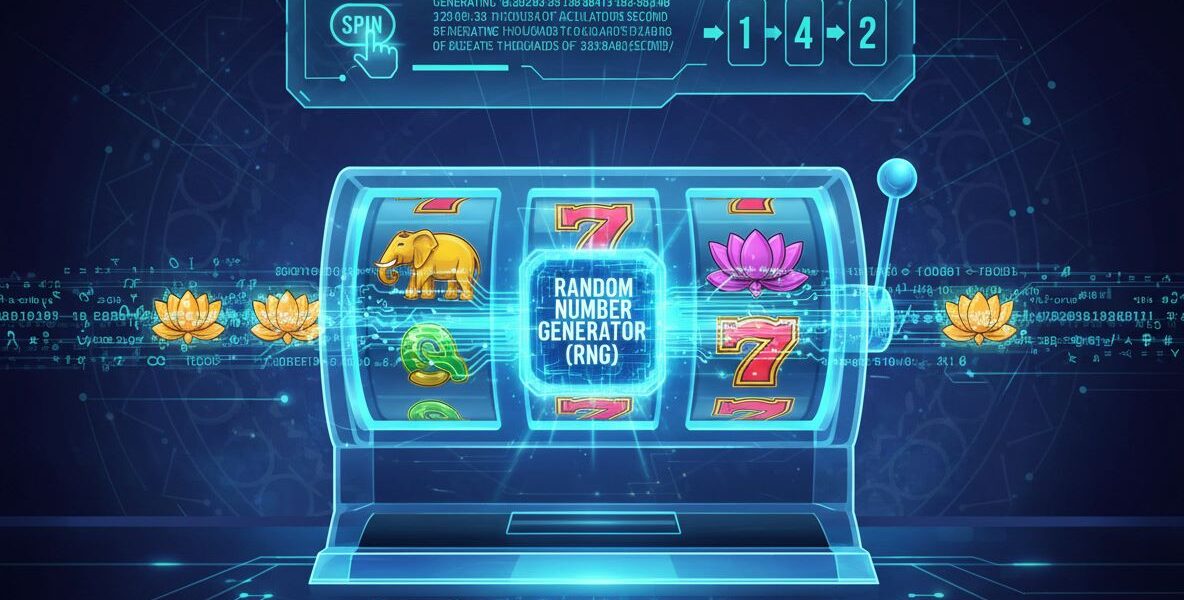
RNG fairness certification for casinos
India’s online gaming landscape operates in a complex regulatory environment where players often lack clear protections against unfair gaming practices. With federal laws offering limited guidance and state regulations varying significantly, Indian players face unique challenges in identifying trustworthy gaming platforms. This regulatory ambiguity makes independent certification of Random Number Generator (RNG) fairness particularly crucial for protecting player interests.
Random Number Generator certification serves as the cornerstone of fair play in online casinos, ensuring that game outcomes remain genuinely unpredictable and free from manipulation. For Indian players navigating offshore platforms and emerging domestic operators, understanding RNG certification becomes essential for making informed gaming choices. Key international certifiers like iTech Labs, eCOGRA, and Gaming Laboratories International (GLI) provide the technical expertise and credibility that regulatory gaps leave unaddressed, offering players reliable indicators of platform trustworthiness.
What is RNG and Why Certification Matters for Indian Players
Random Number Generators form the technological backbone of all digital casino games, determining everything from card distributions in poker to reel combinations in slot machines. Understanding how these systems work and why their certification matters helps Indian players make safer gaming choices in an uncertain regulatory environment. The absence of comprehensive domestic oversight makes international certification standards particularly valuable for protecting player interests.
For Indian players, RNG certification provides crucial assurance that gaming outcomes haven’t been manipulated to favor the house beyond mathematically expected odds. Without proper certification, players have little recourse when suspicious patterns emerge, particularly given the limited legal protections available for online gaming activities. The certification process involves rigorous testing protocols that verify both the mathematical integrity of random number generation and the proper implementation of these systems within gaming platforms.
RNG Fundamentals
Modern online casinos rely primarily on pseudo-random number generators (PRNGs) rather than true random number generators, using complex mathematical algorithms to produce sequences that appear random but follow deterministic patterns. These algorithms, when properly implemented and seeded, generate outcomes that pass statistical randomness tests and provide fair gaming experiences. The key distinction lies in the quality of the algorithm, the entropy of the seed values, and the frequency of re-seeding to maintain unpredictability.
True random number generators, while more mathematically pure, prove impractical for high-volume casino operations due to speed limitations and hardware requirements. Quality PRNGs can produce millions of random numbers per second while maintaining statistical properties indistinguishable from true randomness for gaming purposes. The certification process evaluates both the theoretical soundness of the algorithms used and their practical implementation within the gaming platform’s architecture.
India-Specific Risks Without Certification
- Limited legal recourse for Indian players when disputes arise with uncertified operators, particularly those operating from offshore jurisdictions without formal agreements with Indian authorities
- Higher vulnerability to algorithmically manipulated outcomes designed to increase house edges beyond disclosed rates, exploiting regulatory gaps in consumer protection
- Absence of standardized audit trails making it impossible to verify fair play claims or investigate suspicious gaming patterns through independent analysis
- Increased exposure to platforms that may alter RNG behavior during different time periods or for specific player segments without disclosure
- Lack of transparency in Return to Player (RTP) rates and volatility metrics that certified platforms must disclose and maintain consistently
- Potential targeting by fraudulent operators specifically seeking markets with limited regulatory oversight and player protection mechanisms
Top RNG Certification Bodies for Casino Fairness
Several international testing laboratories have established themselves as gold standards for RNG certification, each bringing unique strengths and specializations to the gaming industry. These organizations conduct comprehensive audits covering both technical implementation and ongoing compliance monitoring. Understanding the different approaches and strengths of major certification bodies helps Indian players identify platforms that have undergone rigorous independent testing.
| Certifier | Key Strengths | India Relevance | Notable Clients |
|---|---|---|---|
| iTech Labs | ISO 17025 accreditation, comprehensive mobile testing | Strong mobile focus relevant to Indian market preferences | Evolution Gaming, NetEnt, Microgaming |
| Gaming Laboratories International (GLI) | Extensive regulatory acceptance, land-based expertise | Potential bridge for emerging Indian land-based operations | IGT, Scientific Games, Aristocrat |
| eCOGRA | Player protection focus, seal recognition program | Consumer protection emphasis valuable in low-regulation environment | Playtech, Betway, 888 Casino |
| BMM Testlabs | Sports betting specialization, blockchain testing | Sports betting popularity and emerging crypto adoption | Sportradar, DraftKings, FanDuel |
| SIQ | European market focus, MGA preferred testing lab | Malta-licensed operators serving Indian players | LeoVegas, Casumo, Mr Green |
| NMi Gaming | Netherlands market expertise, compliance monitoring | Emerging market regulatory development insights | Kindred Group, Betsson, Unibet |
Licensing Authorities Accepting RNG Certs for India-Focused Casinos
Multiple international licensing jurisdictions have established frameworks for accepting RNG certifications from approved testing laboratories, creating regulatory pathways for operators serving Indian players. These licensing authorities vary significantly in their requirements, oversight mechanisms, and reputation for player protection. Understanding the hierarchy and credibility of different licensing jurisdictions helps Indian players identify platforms operating under meaningful regulatory oversight.
- UK Gambling Commission (UKGC) – Highest standards for consumer protection with mandatory technical testing requirements and comprehensive dispute resolution mechanisms serving Indian players
- Malta Gaming Authority (MGA) – Extensive operator base serving India with rigorous RNG testing mandates and established complaint procedures for international players
- Gibraltar Gambling Commissioner – Premium jurisdiction with strict technical standards particularly favored by established operators targeting international markets including India
- Kahnawake Gaming Commission – Long-established jurisdiction with moderate oversight levels and significant operator presence in markets accessible to Indian players
- Curacao Gaming Authority – Lower barrier entry jurisdiction with basic RNG requirements but variable enforcement creating mixed operator quality serving Indian market
- Estonia Gaming Authority – EU-based jurisdiction with growing reputation for balanced regulation and technical standard enforcement for international operators
- Isle of Man Gambling Supervision Commission – Premium jurisdiction with strong technical requirements though smaller operator base serving Indian players specifically
Regulatory Recognition Patterns
Licensing authorities typically maintain approved lists of testing laboratories whose RNG certifications they accept for compliance purposes. The most stringent jurisdictions like the UKGC require ongoing monitoring and periodic re-testing rather than one-time certification. Understanding these patterns helps Indian players identify operators subject to continuous oversight rather than minimal initial approval processes.
India Market Access Considerations
Different licensing jurisdictions take varying approaches to operators serving markets with unclear regulatory status like India. Some require specific player protection measures and responsible gambling tools, while others focus primarily on technical compliance. The level of consumer protection varies significantly between jurisdictions, making the choice of licensing authority particularly important for Indian players seeking recourse mechanisms.
RNG Testing Process Explained
The RNG certification process involves multiple phases of technical evaluation designed to verify both the mathematical integrity of random number generation algorithms and their proper implementation within gaming systems. Testing laboratories employ sophisticated statistical analysis tools and code review procedures to identify potential vulnerabilities or biases that could compromise fair play. The process typically spans several weeks or months depending on the complexity of the gaming platform and the scope of games requiring certification.
Initial testing phases focus on source code review to verify that RNG algorithms meet established mathematical standards for randomness and that proper seeding mechanisms ensure unpredictability. Subsequent testing involves running millions of game rounds while collecting outcome data for statistical analysis using industry-standard randomness tests. The final phase typically involves penetration testing to verify that RNG systems cannot be externally manipulated and that game outcomes cannot be predicted or influenced through system vulnerabilities.
Ongoing compliance monitoring represents a crucial but often overlooked aspect of RNG certification, requiring operators to submit periodic reports and undergo surprise audits to verify continued adherence to certified standards. This monitoring helps detect potential system modifications or degradation that could compromise fairness over time. The frequency and depth of ongoing monitoring varies significantly between certification bodies and licensing jurisdictions, with premium authorities requiring more comprehensive oversight.
Statistical Tests and Tools
- Diehard Battery Tests – Comprehensive suite evaluating randomness properties through multiple statistical measures including frequency analysis, runs tests, and correlation detection
- Chi-squared goodness of fit tests – Statistical evaluation comparing observed outcome distributions against mathematically expected distributions for various game scenarios
- NIST Statistical Test Suite – Federal standard randomness testing covering frequency, block frequency, runs, and complexity measures specifically designed for cryptographic applications
- Kolmogorov-Smirnov tests – Distribution comparison analysis verifying that game outcomes follow expected probability distributions over extended play periods
- Autocorrelation analysis – Time series evaluation ensuring that sequential game outcomes show no predictable patterns or dependencies that players could exploit
- Poker tests and gap tests – Specialized evaluation methods examining specific randomness properties relevant to card games and sequence generation patterns
India-Focused Examples of RNG Certified Platforms
Several gaming platforms specifically targeting the Indian market have obtained international RNG certifications to build player trust and demonstrate commitment to fair play standards. These platforms represent a mix of skill-based gaming operators, fantasy sports platforms, and casino-style gaming sites that have invested in third-party verification of their random number generation systems. Examining certified platforms provides Indian players with concrete examples of operators prioritizing transparency and fair play.
| Platform | Certifier | Games Covered | India Availability |
|---|---|---|---|
| MPL (Mobile Premier League) | Internal audits + third-party verification | Fantasy sports, skill games, casual gaming | Full access across permitted states |
| Dream11 | Multiple third-party security audits | Fantasy sports across multiple formats | Available in skill gaming permitted states |
| RummyCircle | iTech Labs certification | Online rummy variants | Selective state availability |
| Teen Patti Gold | Internal RNG verification | Card games, casual gaming | Social gaming focus, limited real money |
| PokerStars India | eCOGRA certification | Poker tournaments and cash games | Limited to skill gaming permitted jurisdictions |
Certification Transparency Levels
The platforms serving India show varying levels of transparency regarding their RNG certification status, with some prominently displaying certification seals while others mention audits without providing detailed verification information. This transparency gap makes it challenging for Indian players to verify certification claims and understand the scope of testing performed. Leading platforms typically provide direct links to certification reports or testing laboratory verification pages.
Regulatory Compliance Strategies
India-focused platforms often employ multiple certification approaches to address the complex regulatory landscape, combining international certifications with local legal compliance measures. Some platforms obtain certifications that exceed current Indian requirements in anticipation of future regulatory developments. This forward-looking approach helps build player trust while positioning platforms favorably for potential domestic licensing opportunities.
Provably Fair vs Traditional RNG Certification
The emergence of blockchain technology has introduced provably fair systems as an alternative to traditional RNG certification, offering mathematical verification methods that allow players to independently verify game fairness. This technology has particular relevance for cryptocurrency-based gaming platforms that serve Indian players seeking alternatives to traditional fiat currency gaming options. Understanding the trade-offs between these approaches helps players choose platforms aligned with their verification preferences and technical comfort levels.
| Aspect | Provably Fair | Traditional RNG |
|---|---|---|
| Verification Method | Player can independently verify each game outcome | Requires trust in third-party certification authority |
| Technical Complexity | Requires basic cryptographic understanding for verification | Simple acceptance of certification seal or report |
| Regulatory Recognition | Limited formal recognition by traditional licensing authorities | Widely accepted by established gambling regulators |
| Game Variety Support | Best suited for simple games with clear outcomes | Supports complex games with multiple random elements |
| India Accessibility | Crypto platforms may offer easier access despite regulatory uncertainty | Traditional fiat platforms face banking and payment restrictions |
Blockchain Implementation Considerations
Provably fair systems typically use cryptographic hash functions combined with player-provided seeds to generate random outcomes that can be verified post-game using publicly available algorithms. While this approach offers superior transparency, it requires players to actively verify outcomes rather than passively trusting certification authorities. The technical barrier may limit adoption among casual players who prefer simplified trust mechanisms.
How to Verify RNG Fairness as an Indian Player
Indian players can take several practical steps to verify the RNG fairness of gaming platforms before committing funds or personal information. These verification methods range from simple certificate checking to more sophisticated analysis of published Return to Player data and game outcome patterns. Developing a systematic approach to platform evaluation helps players avoid potentially fraudulent operators while identifying trustworthy gaming environments.
- Check for visible certification seals from recognized testing laboratories like iTech Labs, eCOGRA, or GLI, ensuring seals link to valid verification pages on the certifier’s official website
- Verify the platform’s licensing information by cross-referencing operator details with the relevant gambling authority’s public database of licensed operators
- Review published Return to Player (RTP) percentages for games of interest, comparing rates with industry standards and competitor offerings to identify suspicious outliers
- Examine the platform’s transparency regarding game rules, probability disclosures, and random number generation methodology in terms of service or fairness policy documents
- Test small-scale gaming sessions to observe outcome patterns and variance levels, looking for results that deviate significantly from expected statistical distributions
- Research the platform’s reputation through player forums, review sites, and complaint databases to identify recurring fairness concerns or dispute patterns
- Verify that certification covers the specific games you intend to play, as some platforms may have partial certification that excludes certain game categories
Red Flag Identification
Several warning signs indicate potentially problematic RNG implementations that Indian players should avoid. These include platforms that refuse to disclose RTP information, display fake or expired certification seals, or show unusual reluctance to process withdrawals after winning streaks. Additionally, platforms that lack clear contact information or customer service responsiveness may indicate operations prioritizing profit extraction over player satisfaction.
Documentation and Record Keeping
Maintaining records of gaming sessions, including screenshots of significant wins or unusual outcome patterns, provides valuable evidence for potential disputes and helps players identify subtle fairness issues over time. Indian players should be particularly diligent about documentation given the limited formal dispute resolution mechanisms available in the domestic market. Regular analysis of personal gaming data can reveal patterns that suggest RNG manipulation or other fairness issues.
Legal and Regulatory Landscape in India
India’s legal framework for online gaming remains fragmented and evolving, with federal laws providing limited guidance while state governments pursue divergent regulatory approaches. The Public Gaming Act of 1867 predates modern technology and offers little clarity for digital gaming operations, leaving interpretation to state authorities and courts. This regulatory uncertainty creates challenges for both operators seeking compliance and players seeking protection, making international certifications particularly valuable as interim trust mechanisms.
Recent judicial decisions have increasingly distinguished between games of skill and games of chance, with skill-based gaming receiving greater legal protection in many jurisdictions. However, the classification of specific game types remains contentious, and enforcement varies significantly between states. The absence of comprehensive federal gaming legislation means that RNG certification standards developed for international markets often provide higher consumer protection than domestic legal requirements.
The regulatory landscape shows signs of gradual evolution toward more comprehensive frameworks, with several states exploring licensing regimes for online gaming operators. These emerging frameworks may eventually incorporate RNG certification requirements similar to established international jurisdictions. The growing acceptance of digital financial services and cryptocurrency trading suggests potential pathways for regulated gaming expansion, though timeline and scope remain uncertain.
Industry stakeholders increasingly advocate for federal legislation that would provide clarity while incorporating established international standards for technical compliance and player protection. Such legislation could potentially mandate RNG certification as a baseline requirement for licensed operators, bringing India in line with global best practices. The substantial tax revenue potential from regulated gaming provides economic incentives for governments to develop comprehensive regulatory frameworks rather than maintaining prohibition-based approaches.
State Variations and Federal Trends
| State | Stance on Online Gambling | RNG Relevance |
|---|---|---|
| Nagaland | Licensed skill gaming operations permitted | Licensing framework could incorporate RNG requirements |
| Sikkim | Historic online gambling licenses, currently restrictive | Previous regulatory experience with technical standards |
| Telangana | Strict prohibition including skill games | RNG certification irrelevant under current prohibition |
| Karnataka | Restrictive stance with ongoing legal challenges | Future regulation may require international certification standards |
| Maharashtra | Skill gaming generally permitted with restrictions | Potential market for RNG certified skill gaming platforms |
| Tamil Nadu | Variable enforcement of gaming restrictions | Regulatory uncertainty makes certification valuable for operators |